
 Fondofold-Bag

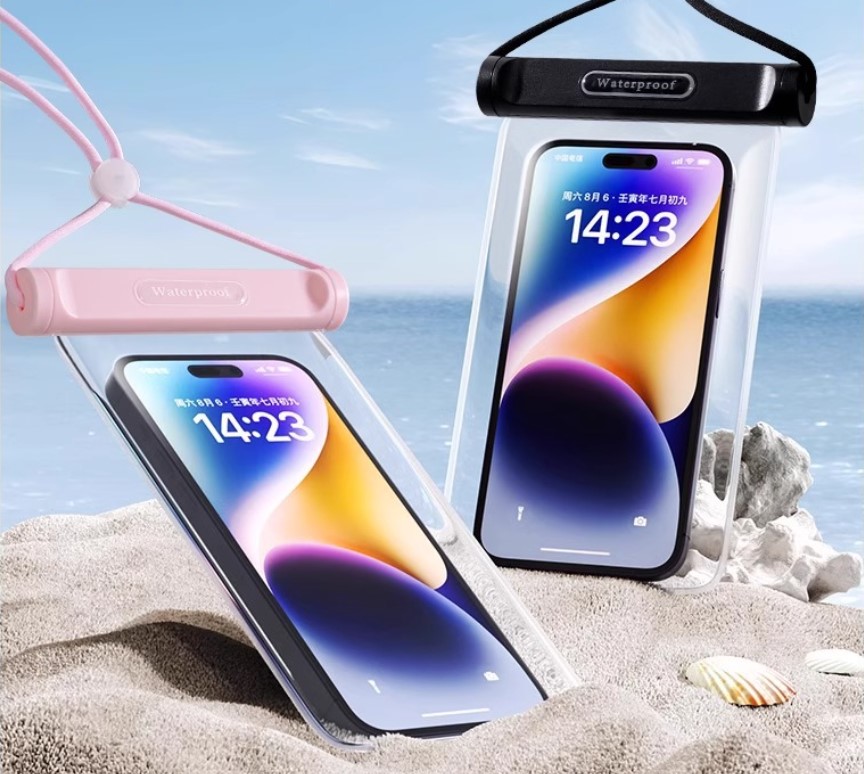
In the summer, people love to flock to rivers and beaches, whether for surfing, swimming, or sailing and thus, you easily get soaked;
So, we finally move on to today's topic: you need a waterproof bag!
Countless outdoor backpacks, shoulder bags, and tote bags claim to have excellent waterproof performance, but after you buy them, you find that in light to moderate rain, within five or six minutes, you're wet, and your belongings are soaked too...
Many backpacks label their waterproof rating to appear professional, but do you really know how to differentiate between waterproof ratings?
Waterproof Performance
Both offer good waterproofing, but TPU, due to its better elasticity, forms a tighter seal at the seam, resulting in a generally higher waterproof rating (e.g., IPX8), making it suitable for underwater or long-term immersion scenarios. PVC's waterproofing performance depends on the sealing process and is generally suitable for splash-proof or short-term immersion.
IPX Waterproof Rating Explanation:
|
IPX-0 |
No waterproof protection. |
|
IPX-1 |
Provides waterproof protection against 3-5 mm/min of rainfall for 10 minutes under normal operating conditions. |
|
IPX-2 |
Essentially the same as IPX-1, but passes a 15-degree tilt waterproof test in all directions. |
|
IPX-3 |
Splash waterproof protection at a 60-degree angle, providing 2-5 minutes of protection against a flow rate of 10 liters/second and a pressure of 80-100 N/m. |
|
IPX-4 |
Essentially the same as IPX-3, but provides splash waterproof protection from all angles and directions. |
|
IPX-5 |
Splash waterproof protection from all angles and directions, providing 2-3 minutes of protection against a flow rate of 12.5 liters/second and a pressure of 30 N/m. |
|
IPX-6 |
High wave waterproof protection, capable of withstanding a depth of 3 meters, a flow rate of 100 liters/min, and a pressure of 100 N/m for 2-3 minutes. |
|
IPX-7 |
Can be submerged in 1 meter of water for 30 minutes. |
|
IPX-8 |
Completely waterproof, can be used continuously in water for extended periods. |
Made of PVC, the sealing process often uses professional clip-on sealing, and the waterproof rating can reach IPX7. However, during the use of PVC, some toxic additives may fall out, containing carcinogens, which are harmful to humans and the environment!

Made of TPU, the sealing process uses a professional clip-on sealing technique, achieving a waterproof rating of IPX8, allowing for use even when submerged up to 15 meters underwater. TPU possesses excellent high tensile strength, high tear strength, toughness, and aging resistance, making it a mature and environmentally friendly material. It boasts unparalleled strength, toughness, wear resistance, cold resistance, oil resistance, water resistance, aging resistance, and weather resistance compared to other plastic materials. Furthermore, it offers numerous superior functions, including high waterproofness and breathability, windproofing, cold protection, antibacterial properties, mildew resistance, warmth retention, UV resistance, and energy release.

For outdoor hiking, mountaineering, and cycling
Since the outdoor activities listed above do not involve water immersion or underwater conditions, the most common issue encountered when using these bags in the wild is rain. An IPX1 to 5 waterproof rating is sufficient. If higher waterproofing is required (e.g., you don't want to buy a separate rain cover), you can choose the German brand Dengbao's urban casual bags, casual backpacks, and cycling backpacks:

For canyoning, beach activities, swimming pools, and water sports
Summer's favorite sports are, of course, swimming, rafting, surfing, windsurfing, and sailing. These activities place higher demands on the waterproof performance of bags. The German brand Denburg offers tube bags (with roll-top closures), waterproof waist (shoulder) bags, and rafting travel bags with waterproof ratings of IPX6 to 7, meeting the needs of most usage scenarios.

High-end military-grade airtight waterproof packs for yachts, sailboats, and other similar applications
The three usage scenarios mentioned above basically cover all possible outdoor situations. However, some outdoor enthusiasts are more demanding, some environments are more rigorous, and there's always a fascination with "military gear," creating a demand for even higher-end products.
These high-end, fully airtight waterproof packs are made with environmentally friendly TPU material; the zippers are made with professionally imported, fully airtight waterproof zippers; and they utilize a new high-frequency welding process for heat fusion. Their waterproof performance is top-notch, capable of withstanding 20-meter deep dives, making them suitable for diving, swimming, outdoor trekking, and even extreme conditions such as energy exploration and desert environments. These waterproof packs meet military standards.

Chemical Structure and Properties
PVC: Polymerized from vinyl chloride monomer, it is a general-purpose plastic. Its flexibility depends on the addition of plasticizers. Unmodified rigid PVC is brittle, while flexible PVC contains a large amount of phthalate plasticizers.
TPU: A block copolymer formed by the reaction of diisocyanate, polyol, and chain extender. It combines the high elasticity of rubber with the processability of plastics, maintaining its softness without the need for large amounts of plasticizers.
Physical Properties
Elasticity and Flexibility: TPU has better elasticity and can withstand greater stretching and bending, making it suitable for waterproof bags that require frequent bending or close contact with the body; PVC is relatively hard and has poor flexibility.
Abrasion Resistance: TPU has stronger abrasion resistance and can maintain its performance even after prolonged use or friction; PVC has relatively weak abrasion resistance and is prone to wear or cracking.
Temperature Resistance: TPU has better low-temperature resistance, with a brittleness temperature down to -50℃, making it suitable for extremely cold environments; PVC easily becomes brittle below -20℃.
Environmental Compatibility
PVC: May involve phthalate plasticizers and heavy metal stabilizers during production and use. It is not easily degraded after disposal and produces toxic gases when burned, resulting in poor environmental performance.
TPU: Contains no chlorine, is recyclable, and has better environmental performance.
Price
PVC is less expensive, suitable for waterproof bags on a budget; TPU is more expensive, but considering its durability and environmental friendliness, it may be more economical in the long run.
Summary: For waterproof bags requiring high elasticity, high abrasion resistance, environmental friendliness, and a high waterproof rating, TPU is the better choice; if the budget is limited, waterproofing requirements are not high, and cost is a concern, PVC can meet basic needs.


